

Product Care

The Nature of Premium Teak
Our furniture highlights the raw beauty and intricate grain of solid, high-grade teak. Because teak is a natural, organic material, it possesses unique characteristics that evolve over time. Understanding these traits will help you appreciate the longevity and quality of your investment.
Natural Variations
No two pieces of teak are exactly alike. Due to the organic nature of the wood, you may notice subtle differences in graining and color between individual pieces. These variations are a testament to the authenticity of the solid timber used in our construction.
The Weathering Process
Left in its natural state, teak will undergo a beautiful transformation. Over time, exposure to the sun and rain will cause the wood to develop a silky silver-gray patina.
-
Timeline: The speed of this process depends on your local climate and exposure to the elements.
-
Integrity: This change is purely cosmetic and does not affect the strength or durability of the wood.
Climate Adaptation (Checking)
Teak naturally expands and contracts with changes in temperature and humidity. As the wood “breathes,” minor shrinking can result in small cracks—known as checking—in the grain or at the assembly joints.
Note: Checking is a standard characteristic of all high-quality hardwoods and does not affect the structural integrity of the furniture.
Natural Oils & “Oil Surfacing”
Teak is world-renowned for its high oil content, which acts as a built-in defense system against rot, fungus, termites, and pests.
-
What to Expect: Occasionally, these protective oils may rise to the surface due to rain or humidity, appearing as “water stains.“
-
The Solution: Because oil content varies between pieces, this may happen a few times before subsiding after several months. Simply rinse the frames with water and a mild detergent.
-
Restoration: Once air-dried, any residual oil marks can be easily removed by lightly sanding the area with 120-grit sandpaper.
Why These Traits Matter
These characteristics are exactly what make teak the premier choice for outdoor luxury. The same oils that cause temporary surfacing are the reason your furniture will remain rot-free for decades.
Recommendations
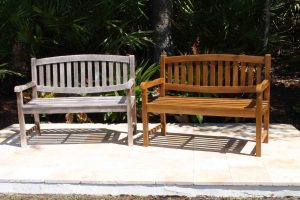
Teak furniture is an investment designed to last for many, many years. While its natural resilience is legendary, following these simple maintenance steps will ensure your set remains as beautiful as the day it arrived.
Cushion Care
To keep your Olefin cushions looking fresh and to prevent the buildup of mold or mildew:
-
Storage: If you do not plan to use your furniture for more than a few days, we recommend removing the cushions and storing them in a dry place.
-
Standing Water: Avoid letting water sit on the surface of your cushions for extended periods.
-
Drying Technique: If your cushions do get wet, tip them on their side with the zipper facing down and unzipped. This allows water to drain quickly and promotes airflow through the foam.
Cleaning & Maintenance
Whether you prefer the golden look or the silver patina, periodic cleaning is vital to prevent dirt and organic buildup.
-
Routine Cleaning: Periodically hose down the furniture with water and a mild detergent solution. Always scrub in the direction of the wood grain.
-
Power Washing: For stubborn areas, a power washer may be used with caution. Do not exceed 1200 PSI and maintain a distance of at least 30″ from the wood to avoid damaging the fibers.
-
Smoothing the Surface: Exposure to moisture over time can “raise the grain,” making the wood feel slightly rough. A light sanding with fine 120-grit sandpaper will easily restore that signature silky-smooth finish.
Protection & Finishes
-
Maintaining Color: If you wish to preserve the original golden-brown color, applying a suitable teak stain or clear protector is necessary. This increases resistance to UV rays, moisture, and food/drink stains.
-
Natural Weathering: If you prefer the silver-gray look, no stains are needed—simply follow the routine cleaning steps above.
Important Placement Note
While teak is extremely resistant to rot and weather, it is still a natural timber.
-
Avoid Direct Ground Contact: If furniture is placed in direct contact with dirt or grass for extended periods, it may suffer from constant moisture wicking. Over many years, this can lead to bacteria and fungus growth.
-
Pro-Tip: Place your furniture on a patio, deck, or stone pavers to ensure proper airflow and drainage around the legs.
Maintenance: Choosing Your Teak Aesthetic
Teak is unique because it offers two distinct, beautiful looks. Whether you prefer the classic weathered silver or the vibrant original gold, follow these guidelines to keep your furniture in peak condition.
Option 1: Allowing Teak to Weather Naturally
If left untreated, teak will naturally take on a silver-gray patina. This is a hallmark of high-quality outdoor hardwood and requires the least amount of maintenance.
-
What to Expect: Exposure to the elements may cause slight flexing or “checking” (small surface cracks). This is natural and does not affect the structural integrity of your furniture.
-
Cleaning: Use a stiff synthetic bristle brush and a mild detergent. For heavily weathered items, a pressure washer can achieve a quicker result (keep the nozzle 30” away and under 1200 PSI).
-
Preventing Mildew: All outdoor furniture is prone to mildew. To prevent it, wash the furniture when new and occasionally thereafter with a mixture of detergent or a light bleach solution.
-
Removing Mildew: Use an outdoor bleach solution (like Clorox) in a garden sprayer. For stubborn spots, a specialized teak cleaner or light sanding may be required. We recommend this deep clean every Spring and Fall.
Option 2: Maintaining That “New Teak” Look
To preserve the golden-brown color, you must treat the wood with a protective stain or sealant.
1. Surface Preparation (The Most Important Step)
For the best bond and finish, you must start with a clean, bare-wood surface.
-
Clean: Surfaces must be dry and free of dirt, oil, or grease. Use detergent or bleach to kill any existing mold; if you stain over mold, it will grow through the finish.
-
Sand: Cleaning often “raises the grain,” making the wood feel rough. Use a palm sander with medium-to-fine grade sandpaper to smooth the surface back to a furniture-grade finish.
-
Dust: Lightly wash or wipe away all sawdust before applying your sealer.
2. Selecting Your Finish
Most products fall into two categories. Choose the one that fits your style:
-
Film-Forming Sealants: These bond to the surface like a varnish, offering a high-gloss or durable satin finish. They provide excellent UV protection but eventually must be stripped off before refinishing.
-
Penetrating Stains: These soak into the wood pores. They offer a more natural, “matte” look and usually contain water repellents and mildewcides. They do not leave a glossy coat and are easier to reapply later.
-
Note on Teak Oil: While an option, teak oil generally requires much more frequent maintenance than modern sealants.
3. Pro-Application Tips
-
Avoid the Sun: Work in the shade or on an overcast day. Direct sun dries the sealer too fast, causing lap marks and uneven finishes.
-
Maintain a “Wet Edge”: Stain one entire piece of wood (e.g., one slat or one leg) at a time without stopping. This prevents dark, unattractive overlap marks.
-
Wipe Excess: Apply with a natural or polyester brush, and use a rag to wipe off any excess pools of stain.
-
Test First: Always test your stain on an inconspicuous area (like the underside of a table) to ensure the shade is exactly what you want.
Expert Advice
While we provide these general guidelines, always follow the specific manufacturer’s instructions on the label of your chosen stain or cleaner.

The Oceanic Standard: About Our Teak
At Oceanic Teak Furniture, we don’t just sell outdoor furniture; we provide heirloom-quality pieces built on a foundation of premium materials and traditional craftsmanship.
Heritage Materials
Our solid teak products are crafted exclusively from responsibly harvested, plantation-grown teak. To ensure maximum stability and prevent future warping, every piece of timber is kiln-dried to the ideal moisture content before it ever reaches our workshop.
Superior Construction
We utilize mortise-and-tenon joinery, the gold standard in woodworking. This interlocking technique provides superb strength and longevity, ensuring your furniture remains rock-solid through years of use.
What to Expect as Your Teak Ages
Teak is a living material, and its “imperfections” are often signs of its natural quality:
-
The Patina: Whether you choose to maintain the “as-new” golden finish or allow it to weather naturally to a sophisticated silver-gray patina, the choice is yours.
-
Checking: You may notice slight flexing or small cracks (known as checking). This is a natural characteristic of all hardwood timbers and will never affect the structural integrity of your furniture.
-
Natural Defenses: Teak is world-renowned for being virtually unaffected by insects, fungus, acids, or alkalis.
The Result: A combination of nature’s best defense and man’s best construction, resulting in the finest outdoor furniture in the world.
Cushion Care
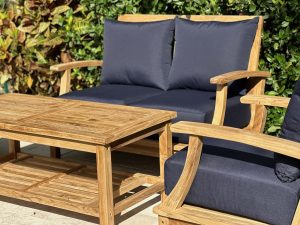 Our cushions are made from Olefin fabric, we found this article from the New York Times ‘The wire’ section which deals with cleaning Olefin Outdoor Fabric:
This spring, when we finally put it out, it stayed clean for about an hour before a passing raven anointed the sofa with a big, grotesque splattered stain. Since then, out among the California super bloom, it’s withstood an avalanche of bugs, buds, dust, dog hair, drippings from trees, and always something fresh from the birds.
To get the set clean again, I kinda treat it like a rug.
First, I vacuum it with a mini roller attachment on a Dyson V8 cordless stick vac. This lifts random tree goobers without rubbing their oozy dyes into the upholstery, digs out dried-up crusty stains, contours to the grooves of the cushions, and reaches between the crevices. I do not roll it over live insects, and I avoid anything wet.
Next, I hit it with a rag. A damp rag helps moisten and soften any crusted stuff that’s still stuck after the vacuum pass. For spot cleaning, I like unscented Huggies. I do two passes, first removing the big chunks, then dabbing the damp spots to grab any remaining solids or goo. A budget cloth rag also works, especially if the job is too big for baby wipes. First, get a bowl of clean water and dampen the rag. If the cushions are damp from rain or drizzle, start with a dry rag, whipping off the crusted stuff, trying not to smear it. The cushions look like absolute garbage after this step.
Scrub it with a brush. I fill a shallow metal bowl with a teaspoon of Oxiclean and a cup of warm water, then stir that around til the Oxiclean dissolves. For small spot cleaning, I use an old toothbrush, and for bigger stains, I use a 6-inch iron handle scrub brush. Both brushes’ vinyl bristles have a way of prying up pieces from fine weaves of the cushions. It leaves trace damp spots that become undetectable after 15 minutes in the sun.
For stains that can’t be lifted with the vacuum or a baby wipe, use an old toothbrush to treat stains. Dip the brush in a diluted watery mix with a squirt of hand soap and a dash of Puracy or OxiClean stain remover.
A brief word of praise for one of the finest tools of its kind: The Rubbermaid Commercial 6-inch Iron Handle Scrubbing Brush. This kind of brush—with an elliptical grip that loosely fits your fingers like brass knuckles for scrubbing—is not exclusive to Rubbermaid, and you can spot its dollar store cousins by their telltale 2-inch blue bristles that are stiff with a slight kink. The bulky peninsula stump handles on the Scotch-Brite and HDX scrub brushes probably work fine, but I like how you can stretch out your fingers in this enclosed space and shift your grip without dropping a slick tool. The straight handle on this Libman or the handle-free Oxo make my wrist and knuckles hurt just looking at them.
The crucial iron handle format—think clothing iron, not made of iron—is weirdly hard to find at Home Depot, Target, or Ace. But it’s front and center at janitorial supply houses: At Janitorial Superstore locations in Florida, Budget Janitorial Supply out of Pelham, Alabama, or Ocean Janitorial in Islip Terrace, NY, this is The Brush.
In the future: Prevent the mess. We have a cover. I have been too lazy to open the box and put it on. Now that the couch is clean, it suddenly seems well worth using the cover. It is probably healthy to look at all this like a car wash situation: You know you’ll need to do it again, but it’s pretty satisfying to clean it well anyway.
Adapt as needed. Some of your success may come down to the material itself. Our cushions are made of Olefin, a polypropylene fiber; so far, so good. If a basic soap and water mix isn’t cutting it for you, try using an OxiClean slurry that staff writer Zoe Vanderweide tested on pit stains. Use a toothbrush to work it in, blot with a rag or paper towel with clean water, and then dab it again with a dry towel.